
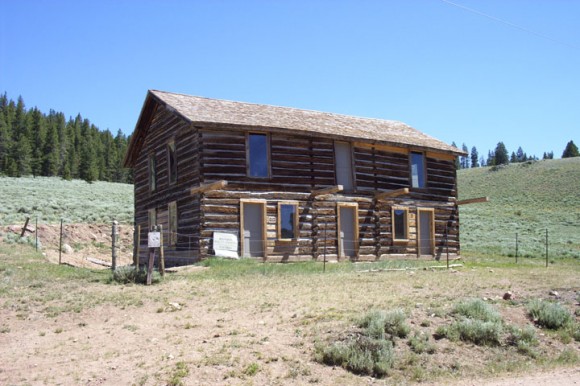
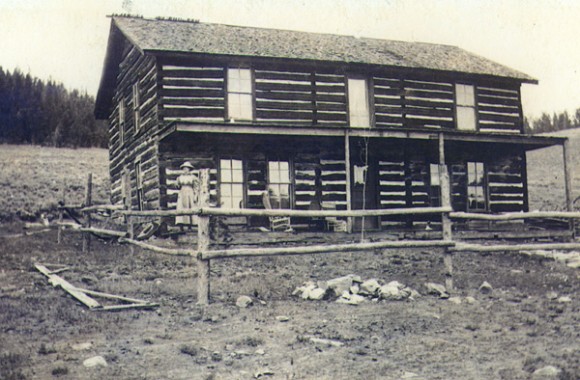
Rock Creek Stage Stop was built in the 1880s by James and Katherine Gates and is a unique two-story log structure near Gore Pass in Routt County. Over the years, it served many roles, including as a family home, hotel, post office, and stage stop. Located along an important historic travel corridor between the east slope of the Continental Divide and the Yampa Valley, the building played a significant role in the settlement and transportation history of northwestern Colorado.
Rock Creek Stage Stop served as a halfway station on the first Wells Fargo mail route into the Yampa Valley and functioned as an important service center for settlers and travelers. Before the railroad changed regional transportation patterns, those traveling between Steamboat Springs and Kremmling stopped here before continuing their journey. Even after the railroad reached Wolcott in 1887, travelers heading north to Steamboat Springs continued the trip by stagecoach, making the Rock Creek Stage Stop a key waypoint along the route. Its location in this remote mountain landscape made it an essential place for communication, travel, and commerce during the early development of the region.
In recognition of its historical significance, the Rock Creek Stage Stop was listed on the National Register of Historic Places in 1982. By the time it was placed on Colorado Preservation, Inc.’s Endangered Places list in 2000, however, the building was in desperate need of stabilization and restoration. Its listing highlighted both the vulnerability of the structure and the importance of preserving one of the area’s few surviving reminders of Colorado’s stagecoach era and early settlement patterns.
Today, the Rock Creek Stage Stop is recognized as a “Saved” resource. Its stabilization was made possible through generous funding from the State Historical Fund, hours of labor by dedicated volunteers and contractors, exemplary work by Mountain Architecture, and a strong partnership among the Steamboat Springs Tread of Pioneers Museum, Historic Routt County!, the Colorado Division of Wildlife, the U.S. Department of Agriculture, and the U.S. Forest Service. Creative fundraising efforts, including community-driven campaigns, also helped build local support for the project. Together, these efforts ensured the preservation of an important Routt County landmark and a rare surviving link to the transportation history of Gore Pass, the Yampa Valley, and the broader northwest Colorado region.