SECTION 106 WEBINAR LINK
CPI recently brought together community leaders, preservation professionals, preservation advocates, and partners for a conversation about the threats to Section 106 of the National Historic Preservation Act and the impacts it will have on the preservation of historic resources in Colorado and across the country. Did you miss it? If so, click on the link below to learn about the changes being proposed, why it matters, how the process works, and how you can make your voice heard.
Passcode: L8?1HFN!
We are also taking this conversation on the road! CPI is planning a series of regional Section 106 meetings across Colorado to make the information more accessible and create opportunities for communities to ask questions and learn how they can participate in the process. If you are interested in hosting a regional committee meeting, please send an email to CPI's Executive Director, Jennifer Orrigo Charles, [email protected].
READ CPI'S ADVOCACY ALERT BELOW
Urgent Action Needed:
Protect Section 106 and Colorado’s Historic Places
Dear Preservation Partners,
For nearly sixty years, whenever a project involved federal money or required federal approval, one law required the historic places in its path to be identified, evaluated, and weighed by people with preservation expertise before decisions were made. Main Street buildings, rural landscapes, sacred sites, and archaeological districts have all been part of that review. On Friday, federal officials vote on a proposal that would strip much of it away.
THE THREAT
On July 17, the Advisory Council on Historic Preservation (ACHP) sent its members a sweeping rewrite of the regulations that implement Section 106 of the National Historic Preservation Act. This Friday, July 24, Council members will vote on revisions to a process that has protected historic places for nearly 60 years.
The proposal is expected to pass, but there is still time for the public to speak up and help change the outcome.
If the ACHP approves the proposal, it would trigger a public comment period of 30 days before final adoption. Decisions made in the coming weeks could shape how historic places are treated across America for decades to come.
These revisions would devastate our ability to protect and preserve historic places and would dramatically reduce public participation in federal decisions that affect local communities. CPI and our preservation partners are strongly against these changes and deeply concerned over their impacts if adopted.
WHAT THE PROPOSED CHANGES WOULD DO
Based on the draft text released for the Council vote, the revisions would remove or weaken many of the core protections Coloradans rely on:
- Public participation becomes optional. Public participation becomes optional, at the exclusive discretion of the federal agency. Agencies would no longer be required to inform you that a project is even happening. If they allow comments at all, the agency alone decides how much weight, if any, your comments receive.
- Consultation becomes optional. The current process brings agencies together with states, Tribes, and local governments to discuss impacts and, where feasible, seek agreement. The proposal strikes both of those phrases from the definition of consultation, leaving only a duty to seek and consider views. Negotiated solutions would give way to memoranda of decision, in which the agency simply announces what it has decided. Agencies could also shorten any deadline in the process simply by sending a letter or posting a notice on their website, and any party that does not respond within the allowed window would be deemed to have waived all objections.
- Colorado loses its voice. Agencies would no longer be required to consult with the State Historic Preservation Office (SHPO) when deciding whether a place is historic or whether a project will harm it. Those determinations would be made by the agency alone. The draft redefines "consultation" itself to mean agencies must only "seek and consider" the views of SHPOs, THPOs, and local governments, not discuss or reach agreement with them. Local governments, currently entitled to a seat at the table, become optional participants at the agency's invitation. Entire categories of federally funded projects, including many grant programs, would be excluded from review altogether.
- Fewer places count as historic. The proposal redefines a historic property as something that must include tangible human improvements and be geographically compact, and it states outright that natural features such as mountains, valleys, bodies of water, and cultural landscapes do not qualify. Colorado's rural cultural landscapes, sacred sites, mining districts, ranching landscapes, and trail corridors could simply fall outside the definition, and because consultation is only triggered by a qualifying historic property, Tribes could lose their voice on sacred places across the state. Harm to a historic place's setting and surroundings would no longer be considered. Only direct physical changes to the property itself would count.
- Agencies review their own projects. Federal agencies would decide when Section 106 applies, how much survey work to do, whether harm will occur, and what, if anything, to do about it. The draft explicitly allows them to weigh the cost and time of investigating historic resources as a reason to look less, and to conclude that other considerations simply outweigh historic preservation.
Together, these changes would leave the public, the state, and Tribes with far less say in what happens to Colorado's historic places.
WHY THIS MATTERS IN COLORADO
Most people have never heard of Section 106, yet nearly every Coloradan has benefited from it.
When a federal agency funds, permits, or carries out a project, Section 106 requires identification, evaluation, and consideration of negative effects to the historic resources in the path of that project. This evaluation is done with consult of Colorado's SHPO, THPOs, local governments, statewide organizations (such as CPI) and the public to consider ways to avoid or reduce harm before decisions are made.
Take a moment and think about the current federal footprint across our state: highway and bridge projects, transmission lines, broadband expansion, water infrastructure, energy development, forest management, disaster recovery, and military training grounds. More than a third of Colorado is under federal land management.
Section 106 is often the only mechanism that requires anyone to pause, identify what is significant, consult the people who know these places best, and consider alternatives before moving forward. If these changes take effect, those decisions will be made in Washington, without notice to you and without your input. Once a historic place is lost, there is no second chance.
Section 106 does not stop projects or prevent progress. Roads are built. Bridges are replaced. Broadband is expanded. Energy projects are moving forward. What Section 106 ensures is that those decisions are informed by the communities they affect.
These proposed changes will critically affect how decisions are made about historic places statewide.
CLOSER TO HOME
CPI consults statewide on Section 106 projects and examples from our Endangered Places Program show what is at stake.
Pinyon Canyon Maneuver Site, Las Animas County
The Pinyon Canyon Maneuver Site includes more than 235,000 acres of U.S. Army training land along the Purgatoire River. It holds one of the densest concentrations of cultural resources in Colorado: rock art, ancestral sites spanning every major cultural period of the Great Plains, Santa Fe Trail resources, and historic ranches. CPI listed one of the historic ranches within the property, Brown’s Sheep Farm, as endangered in 2010.
Surveys of the Piñon Canyon region have identified more than 5,500 sites of historic importance, over 600 of them eligible for the National Register. We know those places exist for one reason: Section 106. Since the Army acquired the land in 1983, the law required identification, evaluation, tribal consultation, and SHPO review before training activities, and that process built the record that protects these resources today.
CPI has been part of this story for decades, an active Section 106 consulting partner and an advocate that worked with the coalition to stop proposed expansion of the site.
The stakes to this resource are current, not historical. The Army is right now proposing to modernize PCMS with new ranges, a dedicated munitions impact area, and expanded infrastructure, a review proceeding under Section 106 today. Under the proposed revisions, that review would look very different: the Army alone would determine which of those 5,500 sites count as historic, cultural landscapes and sacred places could fall outside the definition entirely, required consultation with the SHPO and Tribes would be sharply reduced, and the cost of surveying a landscape this vast could itself become a reason to survey less.
Santa Fe Trail, Otero County
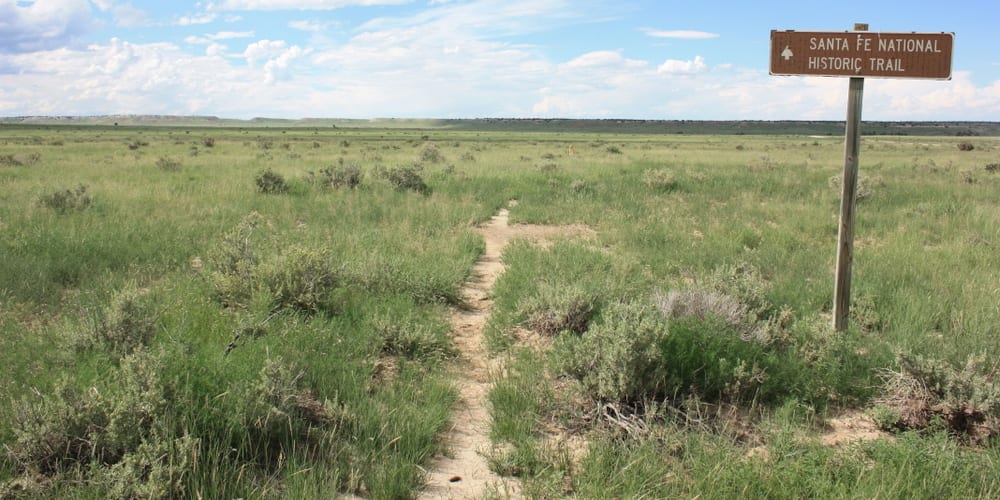
For two centuries, travelers on the Santa Fe Trail have crossed southeastern Colorado through a landscape that still looks much as it did when wagon ruts were first cut into the prairie, and that open viewshed is central to why the trail was named a National Historic Trail and why CPI listed the Santa Fe Trail (the Mountain Branch and Southeast Heritage Region) among Colorado's Most Endangered Places in 2007.
Section 106 is what keeps that viewshed protected. Because cell and communications towers require federal licensing, their placement near the trail triggers review, and Otero County, as a Certified Local Government, participates alongside the SHPO, the National Park Service, and the Santa Fe Trail Association to ensure new towers do not degrade the historic viewshed; that process recently shaped the placement and mitigation of a proposed communications tower to protect the view at Iron Springs.
The draft revisions would end this consultation and review. The changes eliminate harm to a property's setting and the introduction of visual elements as adverse effects, remove local governments entitled seat in the review, and define historic property as geographically compact, a definition a 188-mile trail corridor cannot meet. Towers could then be sited anywhere along the trail with no requirement that anyone consider the view at all.
Gold Medal Orchard, Montezuma County*
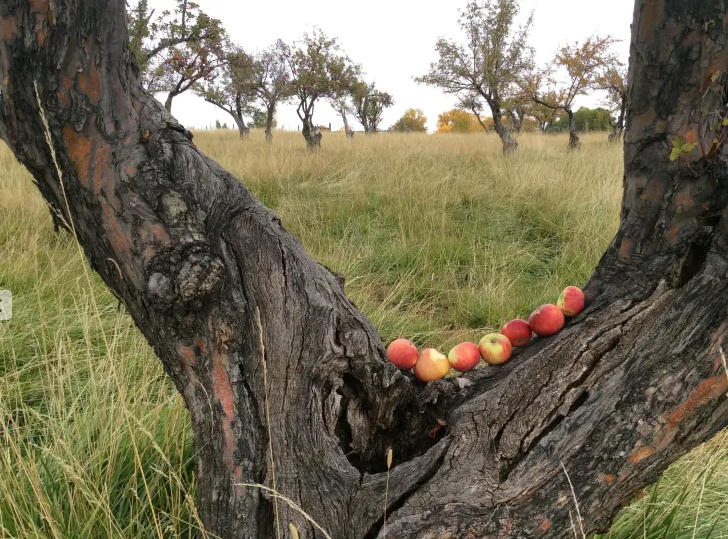
The Gold Medal Orchard in McElmo Canyon is now considered a save thanks to the efforts of the Montezuma Orchard Restoration Project and the Kenyon family after its 2015 listing as one of Colorado's Most Endangered Places. This resource is a historic orchard landscape, not a building. Under the draft's new definition of "historic property," a place must include built structures and be "geographically compact." An orchard like this, along with many rural agricultural sites, traditional cultural landscapes, and working farmsteads across Colorado, could fall outside Section 106 protection entirely, regardless of its documented history or the resources already invested in saving it.
*Note: the Gold Medal Orchard is listed as an illustrative example of the kinds of places the Endangered Places Program works to protect, not as a resource that has gone through Section 106 review.
WE NEED YOU!
- Contact the ACHP directly BEFORE FRIDAY. Ask for the Council to delay Friday's vote, or at minimum commit to a full, meaningful comment process once the rule is published, express your concern with the proposed changes:
- Email [email protected] and/or Call (202) 517-0200
- Reference the draft revisions to the 36 CFR Part 800 regulations and ask that your message be shared with the full Council before the vote. Use this advocacy alert to identify changes that are of concern to you
- Contact your members of Congress today. Call or write Senator Michael Bennet, Senator John Hickenlooper, and your U.S. Representative. Tell them you oppose the ACHP's proposed rewrite of the Section 106 regulations and that meaningful consultation, thoughtful review, and public participation must be preserved. Personal stories about historic places in your own community carry the most weight.
- Get ready to comment. Once the proposed rule is published in the Federal Register, the public will have just 30 days to respond through regulations.gov. Thirty days is not long. Comments submitted during that window become part of the official rulemaking record, can influence the final rule, and preserve issues for any future legal challenge. Start thinking now about the places in your community that Section 106 has protected. The moment the comment period opens, CPI will send background information, talking points, sample comments, and step-by-step instructions for submitting yours.
- Spread the word. Forward this alert to your local historical society, your preservation commission, your elected officials, your neighbors, and anyone who cares about the character of your community. A strong public record is our best tool.
If preservation has ever mattered to you, now is the time to speak up. Colorado's historic places have endured because previous generations chose to act before it was too late. This is our moment to do the same. Thank you for standing with us.
With urgency and gratitude,
Jennifer Orrigo Charles
Executive Director
Colorado Preservation, Inc.
P.S. The ACHP vote concludes this Friday, July 24. If the proposal moves forward, the public is expected to have only 30 days to comment. Watch your inbox. CPI will notify you as soon as the comment period opens and provide everything you need to submit an effective comment.
Current Issue:
Threats to the Historic Preservation Fund
The Historic Preservation Fund (HPF) is the cornerstone of America’s preservation framework, supporting vital efforts to protect the historic places that tell the story of our nation and state. Established by the National Historic Preservation Act of 1966, the HPF provides critical financial resources to State Historic Preservation Offices (SHPOs), Tribal Historic Preservation Offices (THPOs), and local communities through Certified Local Government (CLG) programs.
The HPF is not funded by taxpayer dollars. Instead, it is financed through revenues from offshore oil and gas leases on the Outer Continental Shelf, representing a deliberate reinvestment of natural resource wealth into preserving irreplaceable historic places for future generations.
Despite its importance, the HPF faces ongoing challenges, including delayed funding releases, proposed reductions in appropriations, and uncertainty regarding long-term reauthorization. Without stable and timely funding, preservation efforts in Colorado and across the country face significant setbacks, limiting the ability of communities to protect the places that define their history and character.

Why Advocacy Matters
Preservation doesn’t happen by chance, it happens through action. While dedicated individuals and communities work every day to protect and adapt the places that reflect Colorado’s heritage, those efforts must be supported by strong public policies, sustainable funding, and informed decision-making at every level of government. Advocacy ensures that historic places remain a priority when critical decisions about development, funding, and community planning are made.
Advocacy is a critical part of CPI’s mission, and it is our role to ensure that important information about preservation issues reaches the public, community leaders, and decision-makers. We work to raise awareness about the policies, legislation, and funding decisions that directly impact Colorado’s historic places and the communities that benefit from them. By providing timely, accurate information and clear calls to action, we empower our supporters to become effective advocates—helping to amplify the preservation message and demonstrate to legislators the real-world importance of protecting Colorado’s historic resources. Together, through informed and active advocacy, we can shape policies that sustain preservation efforts for generations to come.
Immediate Concern:
Release FY 2025 Historic Preservation Funds
Although Congress approved funding for the Historic Preservation Fund (HPF) for Fiscal Year 2025, those funds have not yet been made available to the agencies and programs that depend on them. This delay at the federal level is preventing important preservation work from moving forward, leaving state and local organizations without the resources they need to protect historic places and support community revitalization efforts.
If not released, this delay will impact preservation efforts in Colorado.

What’s at Stake?
- Without the release of these funds, SHPOs would have to lay off staff are struggling to perform federally mandated duties such as reviewing infrastructure and development projects for historic impacts, nominating sites to the National Register, and supporting rehabilitation projects through historic tax credits.
- Delays in funding jeopardize preservation jobs, force program cutbacks, and leave vulnerable historic places without the resources needed to safeguard them.
- Communities relying on HPF-supported grants for revitalization projects are left in limbo, stalling local economic development tied to preservation.
Why It Matters Now
As we approach the nation’s 250th anniversary in 2026, historic preservation is more than a celebration of the past—it’s an investment in our future. Preserving our shared heritage strengthens community identity, supports local economies through heritage tourism, and fosters pride of place for future generations. Without immediate action, decades of preservation progress are at risk.
Take Action: Your Voice Can Make a Difference
We need your help to ensure Congress understands the urgency of this issue. Please take a few minutes today to reach out to your elected officials and urge them to:
- Immediately release the FY 2025 Historic Preservation Fund allocations.
- Fully fund the HPF at $225 million for FY 2026 to prevent future funding crises.
- Reauthorize the HPF to ensure long-term, stable preservation funding.
Preservation is not just about honoring the past, it is about building strong, resilient communities for the future. Your advocacy is preservation in action. Together, we can protect Colorado’s history for generations to come.
Here’s how you can help:
- Contact Your Representatives:
Find your congressional representatives and their contact information here. - Use This Message Template:
“As your constituent, I am writing to urge you to immediately release the FY 2025 allocations from the Historic Preservation Fund. These critical resources support jobs, community revitalization, and the protection of our nation’s and Colorado’s historic places. Without timely funding, essential preservation work is at risk. I also ask that you support full funding and reauthorization of the HPF for FY 2026. Our shared history and our communities depend on it.”
- Spread the Word:
Share this message with friends, family, and colleagues. Amplifying our collective voices is the most powerful tool we have.

Looking Ahead:
Threats to the FY 2026 Budget & Long-Term Reauthorization
Beyond the immediate funding delay, the proposed federal budget for FY 2026 includes significant reductions to the HPF and ongoing uncertainty about its long-term reauthorization. Without full funding and a renewed commitment to the HPF, Colorado and other states risk losing the critical foundation needed to preserve historic resources and sustain preservation programs well into the future.
- Reduced Funding Jeopardizes Preservation Capacity: Proposed cuts would diminish the capacity of SHPOs, THPOs, and CLG communities to carry out preservation projects, particularly in rural and under-resourced areas.
- Economic and Community Revitalization at Risk: Without robust investment, preservation efforts that drive local economic growth, foster heritage tourism, and revitalize main streets will face significant barriers.
- Loss of Stability for Preservation Planning: Long-term preservation initiatives require predictable funding. Without reauthorization of the HPF, states will be unable to plan and invest in multi-year projects that protect and activate historic places for future generations.
As we approach the nation’s 250th anniversary in 2026, this is a pivotal moment to reaffirm our commitment to preserving America’s historic and cultural resources. Full funding and reauthorization of the HPF will ensure that preservation remains a priority for years to come.
How This Affects You
- Threats to Local Landmarks and Main Streets: Without timely HPF funding, projects supported by the State Historical Fund (SHF)—including the restoration of iconic Colorado landmarks, main streets, and public spaces—are delayed or canceled. These are the places that foster community pride and support local businesses.
- Reduced Support for Local Governments: Communities participating in the Certified Local Government (CLG) program rely on HPF funds to support local preservation initiatives. Without these resources, local governments struggle to maintain preservation programs, protect significant sites, and promote heritage tourism that fuels local economies.
- Economic Development at Risk: Historic preservation is a proven driver of economic growth, particularly in rural and under-resourced communities. Preservation projects create jobs, increase property values, attract tourism, and revitalize downtowns. Delayed or reduced funding means stalled projects, fewer jobs, and lost economic opportunities.
- Weakened Public Input on Development: Without adequate funding, Colorado’s preservation offices cannot fully participate in reviews of federally funded development projects. This limits community input and increases the risk that historically and culturally significant places including those connected to underrepresented communities will be lost or irreparably harmed.
Preserving Colorado’s historic places is about sustaining livable, economically resilient communities and ensuring that future generations understand and appreciate the places that shaped our state’s history.
Take Action:
Your Voice Can Make a Difference
CPI calls on all Coloradans to join us in urging Congress to take immediate action. Both the release of FY 2025 Historic Preservation Fund allocations and full funding for FY 2026 are critical to protecting Colorado’s past and ensuring a strong, vibrant future for our communities.
We Urge Congress to:
- Immediately release the FY 2025 Historic Preservation Fund allocations.
- Fully fund the HPF at $225 million for FY 2026 to prevent future funding shortfalls.
- Reauthorize the HPF to ensure long-term, stable preservation funding.

Urgent Action Needed:
Protect Section 106 and Colorado’s Historic Places
Dear Preservation Partners,
For nearly sixty years, whenever a project involved federal money or required federal approval, one law required the historic places in its path to be identified, evaluated, and weighed by people with preservation expertise before decisions were made. Main Street buildings, rural landscapes, sacred sites, and archaeological districts have all been part of that review. On Friday, federal officials vote on a proposal that would strip much of it away.
THE THREAT
On July 17, the Advisory Council on Historic Preservation (ACHP) sent its members a sweeping rewrite of the regulations that implement Section 106 of the National Historic Preservation Act. This Friday, July 24, Council members will vote on revisions to a process that has protected historic places for nearly 60 years.
The proposal is expected to pass, but there is still time for the public to speak up and help change the outcome.
If the ACHP approves the proposal, it would trigger a public comment period of 30 days before final adoption. Decisions made in the coming weeks could shape how historic places are treated across America for decades to come.
These revisions would devastate our ability to protect and preserve historic places and would dramatically reduce public participation in federal decisions that affect local communities. CPI and our preservation partners are strongly against these changes and deeply concerned over their impacts if adopted.
WHAT THE PROPOSED CHANGES WOULD DO
Based on the draft text released for the Council vote, the revisions would remove or weaken many of the core protections Coloradans rely on:
- Public participation becomes optional. Public participation becomes optional, at the exclusive discretion of the federal agency. Agencies would no longer be required to inform you that a project is even happening. If they allow comments at all, the agency alone decides how much weight, if any, your comments receive.
- Consultation becomes optional. The current process brings agencies together with states, Tribes, and local governments to discuss impacts and, where feasible, seek agreement. The proposal strikes both of those phrases from the definition of consultation, leaving only a duty to seek and consider views. Negotiated solutions would give way to memoranda of decision, in which the agency simply announces what it has decided. Agencies could also shorten any deadline in the process simply by sending a letter or posting a notice on their website, and any party that does not respond within the allowed window would be deemed to have waived all objections.
- Colorado loses its voice. Agencies would no longer be required to consult with the State Historic Preservation Office (SHPO) when deciding whether a place is historic or whether a project will harm it. Those determinations would be made by the agency alone. The draft redefines "consultation" itself to mean agencies must only "seek and consider" the views of SHPOs, THPOs, and local governments, not discuss or reach agreement with them. Local governments, currently entitled to a seat at the table, become optional participants at the agency's invitation. Entire categories of federally funded projects, including many grant programs, would be excluded from review altogether.
- Fewer places count as historic. The proposal redefines a historic property as something that must include tangible human improvements and be geographically compact, and it states outright that natural features such as mountains, valleys, bodies of water, and cultural landscapes do not qualify. Colorado's rural cultural landscapes, sacred sites, mining districts, ranching landscapes, and trail corridors could simply fall outside the definition, and because consultation is only triggered by a qualifying historic property, Tribes could lose their voice on sacred places across the state. Harm to a historic place's setting and surroundings would no longer be considered. Only direct physical changes to the property itself would count.
- Agencies review their own projects. Federal agencies would decide when Section 106 applies, how much survey work to do, whether harm will occur, and what, if anything, to do about it. The draft explicitly allows them to weigh the cost and time of investigating historic resources as a reason to look less, and to conclude that other considerations simply outweigh historic preservation.
Together, these changes would leave the public, the state, and Tribes with far less say in what happens to Colorado's historic places.
WHY THIS MATTERS IN COLORADO
Most people have never heard of Section 106, yet nearly every Coloradan has benefited from it.
When a federal agency funds, permits, or carries out a project, Section 106 requires identification, evaluation, and consideration of negative effects to the historic resources in the path of that project. This evaluation is done with consult of Colorado's SHPO, THPOs, local governments, statewide organizations (such as CPI) and the public to consider ways to avoid or reduce harm before decisions are made.
Take a moment and think about the current federal footprint across our state: highway and bridge projects, transmission lines, broadband expansion, water infrastructure, energy development, forest management, disaster recovery, and military training grounds. More than a third of Colorado is under federal land management.
Section 106 is often the only mechanism that requires anyone to pause, identify what is significant, consult the people who know these places best, and consider alternatives before moving forward. If these changes take effect, those decisions will be made in Washington, without notice to you and without your input. Once a historic place is lost, there is no second chance.
Section 106 does not stop projects or prevent progress. Roads are built. Bridges are replaced. Broadband is expanded. Energy projects are moving forward. What Section 106 ensures is that those decisions are informed by the communities they affect.
These proposed changes will critically affect how decisions are made about historic places statewide.
CLOSER TO HOME
CPI consults statewide on Section 106 projects and examples from our Endangered Places Program show what is at stake.
Pinyon Canyon Maneuver Site, Las Animas County
The Pinyon Canyon Maneuver Site includes more than 235,000 acres of U.S. Army training land along the Purgatoire River. It holds one of the densest concentrations of cultural resources in Colorado: rock art, ancestral sites spanning every major cultural period of the Great Plains, Santa Fe Trail resources, and historic ranches. CPI listed one of the historic ranches within the property, Brown’s Sheep Farm, as endangered in 2010.
Surveys of the Piñon Canyon region have identified more than 5,500 sites of historic importance, over 600 of them eligible for the National Register. We know those places exist for one reason: Section 106. Since the Army acquired the land in 1983, the law required identification, evaluation, tribal consultation, and SHPO review before training activities, and that process built the record that protects these resources today.
CPI has been part of this story for decades, an active Section 106 consulting partner and an advocate that worked with the coalition to stop proposed expansion of the site.
The stakes to this resource are current, not historical. The Army is right now proposing to modernize PCMS with new ranges, a dedicated munitions impact area, and expanded infrastructure, a review proceeding under Section 106 today. Under the proposed revisions, that review would look very different: the Army alone would determine which of those 5,500 sites count as historic, cultural landscapes and sacred places could fall outside the definition entirely, required consultation with the SHPO and Tribes would be sharply reduced, and the cost of surveying a landscape this vast could itself become a reason to survey less.
Santa Fe Trail, Otero County
For two centuries, travelers on the Santa Fe Trail have crossed southeastern Colorado through a landscape that still looks much as it did when wagon ruts were first cut into the prairie, and that open viewshed is central to why the trail was named a National Historic Trail and why CPI listed the Santa Fe Trail (the Mountain Branch and Southeast Heritage Region) among Colorado's Most Endangered Places in 2007.
Section 106 is what keeps that viewshed protected. Because cell and communications towers require federal licensing, their placement near the trail triggers review, and Otero County, as a Certified Local Government, participates alongside the SHPO, the National Park Service, and the Santa Fe Trail Association to ensure new towers do not degrade the historic viewshed; that process recently shaped the placement and mitigation of a proposed communications tower to protect the view at Iron Springs.
The draft revisions would end this consultation and review. The changes eliminate harm to a property's setting and the introduction of visual elements as adverse effects, remove local governments entitled seat in the review, and define historic property as geographically compact, a definition a 188-mile trail corridor cannot meet. Towers could then be sited anywhere along the trail with no requirement that anyone consider the view at all.
Gold Medal Orchard, Montezuma County*
The Gold Medal Orchard in McElmo Canyon is now considered a save thanks to the efforts of the Montezuma Orchard Restoration Project and the Kenyon family after its 2015 listing as one of Colorado's Most Endangered Places. This resource is a historic orchard landscape, not a building. Under the draft's new definition of "historic property," a place must include built structures and be "geographically compact." An orchard like this, along with many rural agricultural sites, traditional cultural landscapes, and working farmsteads across Colorado, could fall outside Section 106 protection entirely, regardless of its documented history or the resources already invested in saving it.
*Note: the Gold Medal Orchard is listed as an illustrative example of the kinds of places the Endangered Places Program works to protect, not as a resource that has gone through Section 106 review.
WE NEED YOU!
- Contact the ACHP directly BEFORE FRIDAY. Ask for the Council to delay Friday's vote, or at minimum commit to a full, meaningful comment process once the rule is published, express your concern with the proposed changes:
- Email [email protected] and/or Call (202) 517-0200
- Reference the draft revisions to the 36 CFR Part 800 regulations and ask that your message be shared with the full Council before the vote. Use this advocacy alert to identify changes that are of concern to you
- Contact your members of Congress today. Call or write Senator Michael Bennet, Senator John Hickenlooper, and your U.S. Representative. Tell them you oppose the ACHP's proposed rewrite of the Section 106 regulations and that meaningful consultation, thoughtful review, and public participation must be preserved. Personal stories about historic places in your own community carry the most weight.
- Get ready to comment. Once the proposed rule is published in the Federal Register, the public will have just 30 days to respond through regulations.gov. Thirty days is not long. Comments submitted during that window become part of the official rulemaking record, can influence the final rule, and preserve issues for any future legal challenge. Start thinking now about the places in your community that Section 106 has protected. The moment the comment period opens, CPI will send background information, talking points, sample comments, and step-by-step instructions for submitting yours.
- Spread the word. Forward this alert to your local historical society, your preservation commission, your elected officials, your neighbors, and anyone who cares about the character of your community. A strong public record is our best tool.
If preservation has ever mattered to you, now is the time to speak up. Colorado's historic places have endured because previous generations chose to act before it was too late. This is our moment to do the same. Thank you for standing with us.
With urgency and gratitude,
Jennifer Orrigo Charles
Executive Director
Colorado Preservation, Inc.
P.S. The ACHP vote concludes this Friday, July 24. If the proposal moves forward, the public is expected to have only 30 days to comment. Watch your inbox. CPI will notify you as soon as the comment period opens and provide everything you need to submit an effective comment.
Current Issue:
Threats to the Historic Preservation Fund
The Historic Preservation Fund (HPF) is the cornerstone of America’s preservation framework, supporting vital efforts to protect the historic places that tell the story of our nation and state. Established by the National Historic Preservation Act of 1966, the HPF provides critical financial resources to State Historic Preservation Offices (SHPOs), Tribal Historic Preservation Offices (THPOs), and local communities through Certified Local Government (CLG) programs.
The HPF is not funded by taxpayer dollars. Instead, it is financed through revenues from offshore oil and gas leases on the Outer Continental Shelf, representing a deliberate reinvestment of natural resource wealth into preserving irreplaceable historic places for future generations.
Despite its importance, the HPF faces ongoing challenges, including delayed funding releases, proposed reductions in appropriations, and uncertainty regarding long-term reauthorization. Without stable and timely funding, preservation efforts in Colorado and across the country face significant setbacks, limiting the ability of communities to protect the places that define their history and character.
Why Advocacy Matters
Preservation doesn’t happen by chance, it happens through action. While dedicated individuals and communities work every day to protect and adapt the places that reflect Colorado’s heritage, those efforts must be supported by strong public policies, sustainable funding, and informed decision-making at every level of government. Advocacy ensures that historic places remain a priority when critical decisions about development, funding, and community planning are made.
Advocacy is a critical part of CPI’s mission, and it is our role to ensure that important information about preservation issues reaches the public, community leaders, and decision-makers. We work to raise awareness about the policies, legislation, and funding decisions that directly impact Colorado’s historic places and the communities that benefit from them. By providing timely, accurate information and clear calls to action, we empower our supporters to become effective advocates—helping to amplify the preservation message and demonstrate to legislators the real-world importance of protecting Colorado’s historic resources. Together, through informed and active advocacy, we can shape policies that sustain preservation efforts for generations to come.
Immediate Concern:
Release FY 2025 Historic Preservation Funds
Although Congress approved funding for the Historic Preservation Fund (HPF) for Fiscal Year 2025, those funds have not yet been made available to the agencies and programs that depend on them. This delay at the federal level is preventing important preservation work from moving forward, leaving state and local organizations without the resources they need to protect historic places and support community revitalization efforts.
If not released, this delay will impact preservation efforts in Colorado.
What’s at Stake?
- Without the release of these funds, SHPOs would have to lay off staff are struggling to perform federally mandated duties such as reviewing infrastructure and development projects for historic impacts, nominating sites to the National Register, and supporting rehabilitation projects through historic tax credits.
- Delays in funding jeopardize preservation jobs, force program cutbacks, and leave vulnerable historic places without the resources needed to safeguard them.
- Communities relying on HPF-supported grants for revitalization projects are left in limbo, stalling local economic development tied to preservation.
Why It Matters Now
As we approach the nation’s 250th anniversary in 2026, historic preservation is more than a celebration of the past—it’s an investment in our future. Preserving our shared heritage strengthens community identity, supports local economies through heritage tourism, and fosters pride of place for future generations. Without immediate action, decades of preservation progress are at risk.
Take Action: Your Voice Can Make a Difference
We need your help to ensure Congress understands the urgency of this issue. Please take a few minutes today to reach out to your elected officials and urge them to:
- Immediately release the FY 2025 Historic Preservation Fund allocations.
- Fully fund the HPF at $225 million for FY 2026 to prevent future funding crises.
- Reauthorize the HPF to ensure long-term, stable preservation funding.
Preservation is not just about honoring the past, it is about building strong, resilient communities for the future. Your advocacy is preservation in action. Together, we can protect Colorado’s history for generations to come.
Here’s how you can help:
- Contact Your Representatives:
Find your congressional representatives and their contact information here. - Use This Message Template:
“As your constituent, I am writing to urge you to immediately release the FY 2025 allocations from the Historic Preservation Fund. These critical resources support jobs, community revitalization, and the protection of our nation’s and Colorado’s historic places. Without timely funding, essential preservation work is at risk. I also ask that you support full funding and reauthorization of the HPF for FY 2026. Our shared history and our communities depend on it.”
- Spread the Word:
Share this message with friends, family, and colleagues. Amplifying our collective voices is the most powerful tool we have.
Looking Ahead:
Threats to the FY 2026 Budget & Long-Term Reauthorization
Beyond the immediate funding delay, the proposed federal budget for FY 2026 includes significant reductions to the HPF and ongoing uncertainty about its long-term reauthorization. Without full funding and a renewed commitment to the HPF, Colorado and other states risk losing the critical foundation needed to preserve historic resources and sustain preservation programs well into the future.
- Reduced Funding Jeopardizes Preservation Capacity: Proposed cuts would diminish the capacity of SHPOs, THPOs, and CLG communities to carry out preservation projects, particularly in rural and under-resourced areas.
- Economic and Community Revitalization at Risk: Without robust investment, preservation efforts that drive local economic growth, foster heritage tourism, and revitalize main streets will face significant barriers.
- Loss of Stability for Preservation Planning: Long-term preservation initiatives require predictable funding. Without reauthorization of the HPF, states will be unable to plan and invest in multi-year projects that protect and activate historic places for future generations.
As we approach the nation’s 250th anniversary in 2026, this is a pivotal moment to reaffirm our commitment to preserving America’s historic and cultural resources. Full funding and reauthorization of the HPF will ensure that preservation remains a priority for years to come.
How This Affects You
- Threats to Local Landmarks and Main Streets: Without timely HPF funding, projects supported by the State Historical Fund (SHF)—including the restoration of iconic Colorado landmarks, main streets, and public spaces—are delayed or canceled. These are the places that foster community pride and support local businesses.
- Reduced Support for Local Governments: Communities participating in the Certified Local Government (CLG) program rely on HPF funds to support local preservation initiatives. Without these resources, local governments struggle to maintain preservation programs, protect significant sites, and promote heritage tourism that fuels local economies.
- Economic Development at Risk: Historic preservation is a proven driver of economic growth, particularly in rural and under-resourced communities. Preservation projects create jobs, increase property values, attract tourism, and revitalize downtowns. Delayed or reduced funding means stalled projects, fewer jobs, and lost economic opportunities.
- Weakened Public Input on Development: Without adequate funding, Colorado’s preservation offices cannot fully participate in reviews of federally funded development projects. This limits community input and increases the risk that historically and culturally significant places including those connected to underrepresented communities will be lost or irreparably harmed.
Preserving Colorado’s historic places is about sustaining livable, economically resilient communities and ensuring that future generations understand and appreciate the places that shaped our state’s history.
Take Action:
Your Voice Can Make a Difference
CPI calls on all Coloradans to join us in urging Congress to take immediate action. Both the release of FY 2025 Historic Preservation Fund allocations and full funding for FY 2026 are critical to protecting Colorado’s past and ensuring a strong, vibrant future for our communities.
We Urge Congress to:
- Immediately release the FY 2025 Historic Preservation Fund allocations.
- Fully fund the HPF at $225 million for FY 2026 to prevent future funding shortfalls.
- Reauthorize the HPF to ensure long-term, stable preservation funding.