

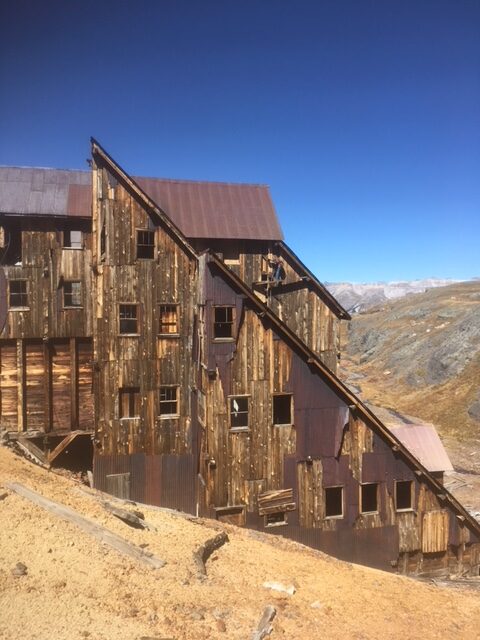
Lewis Mill is one of the most significant surviving high-country mining structures in Colorado. Located at approximately 12,450 feet above sea level in Bridal Veil Basin above Telluride, within a National Historic Landmark District, the mill was built in 1910 as a 60-ton-capacity ore concentration mill. Although its years of operation were relatively brief, the five-story structure remains an extraordinary reminder of Colorado’s mining history and one of the most scenic industrial landmarks in the state.
Part of a larger mining complex that once included a mine portal, tram house, bunkhouse, and office, Lewis Mill was originally powered by electricity from the Smuggler-Union Hydroelectric Power Plant, also known as the Bridal Veil Falls Powerhouse. The mill is also an outstanding example of timber-frame industrial construction. During its years of operation, the technology and equipment used at the site reflected an important transition in ore processing from stamp milling to full chemical flotation. Today, Lewis Mill is recognized as the only remaining transitional mill in Colorado known to retain its original milling equipment, making it especially important in the history of mining engineering and processing technology.
Contemporary newspaper coverage from 1910 offers a vivid picture of the mill’s construction and early significance. By early September of that year, the San Miguel Examiner reported that builder C. W. Maxwell had nearly completed the mill after an intense period of work and expected the plant to begin operating later that month. The article described the impressive speed of construction, noting that only weeks earlier less than half of the timbers had reached the site and the foundation was still incomplete. It also highlighted the mill’s five-floor design, concrete foundations for heavy machinery, electric power system, tramway connection from the Lewis shaft to the mill, and other advanced features that underscored the sophistication of the operation for such a remote alpine setting.
Lewis Mill’s remote location ultimately helped preserve it. Because it was so difficult to access, the mill’s interior contents escaped the metal salvage campaigns that stripped many historic industrial sites during World War II. As a result, Lewis Mill remains one of the few surviving mills in the state with its original machinery still intact. At the same time, however, its elevation and isolation also made preservation especially difficult. Exposure to severe weather, snow, and the challenges of maintaining a structure in such a rugged landscape placed the building at long-term risk.
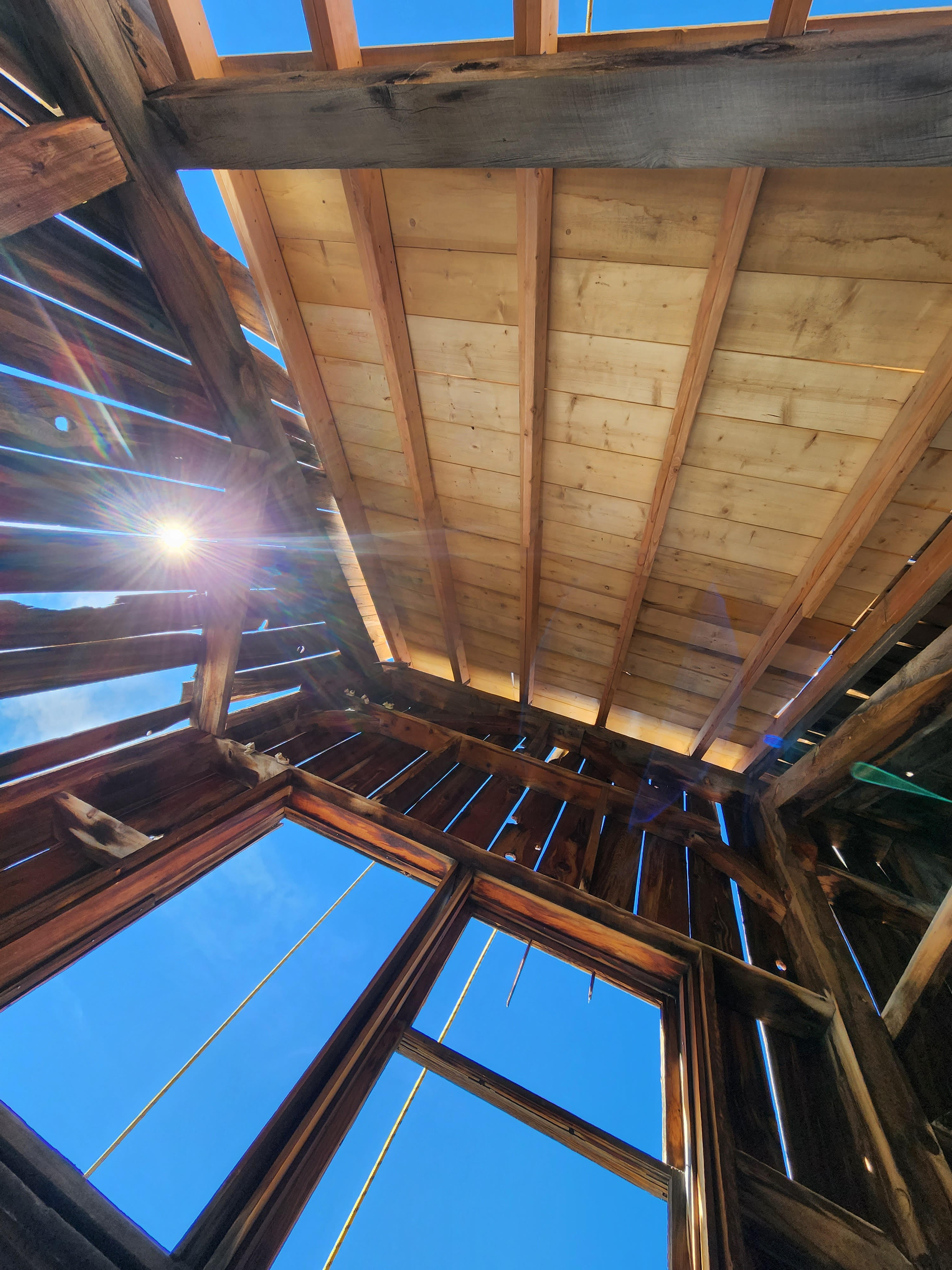
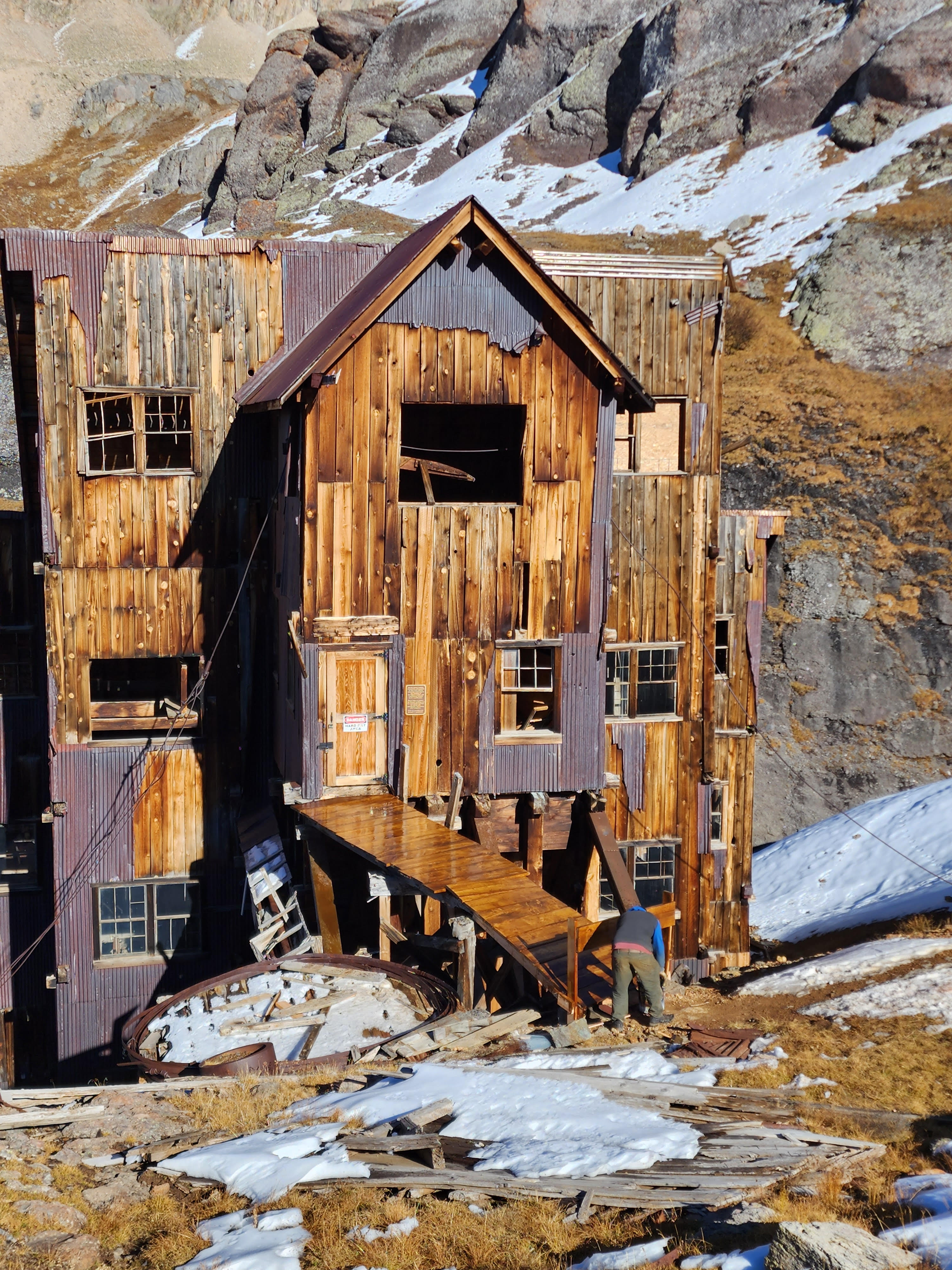
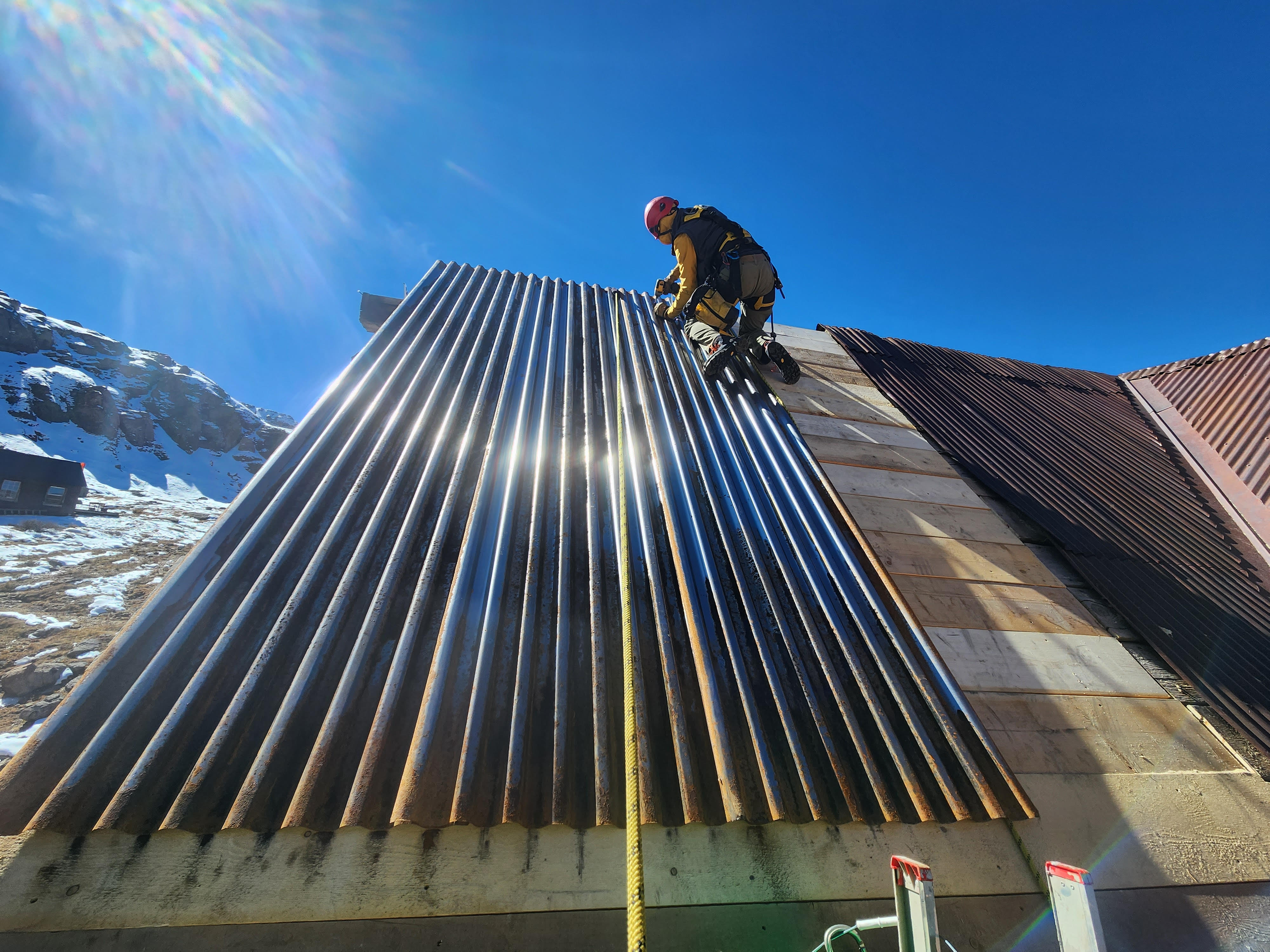
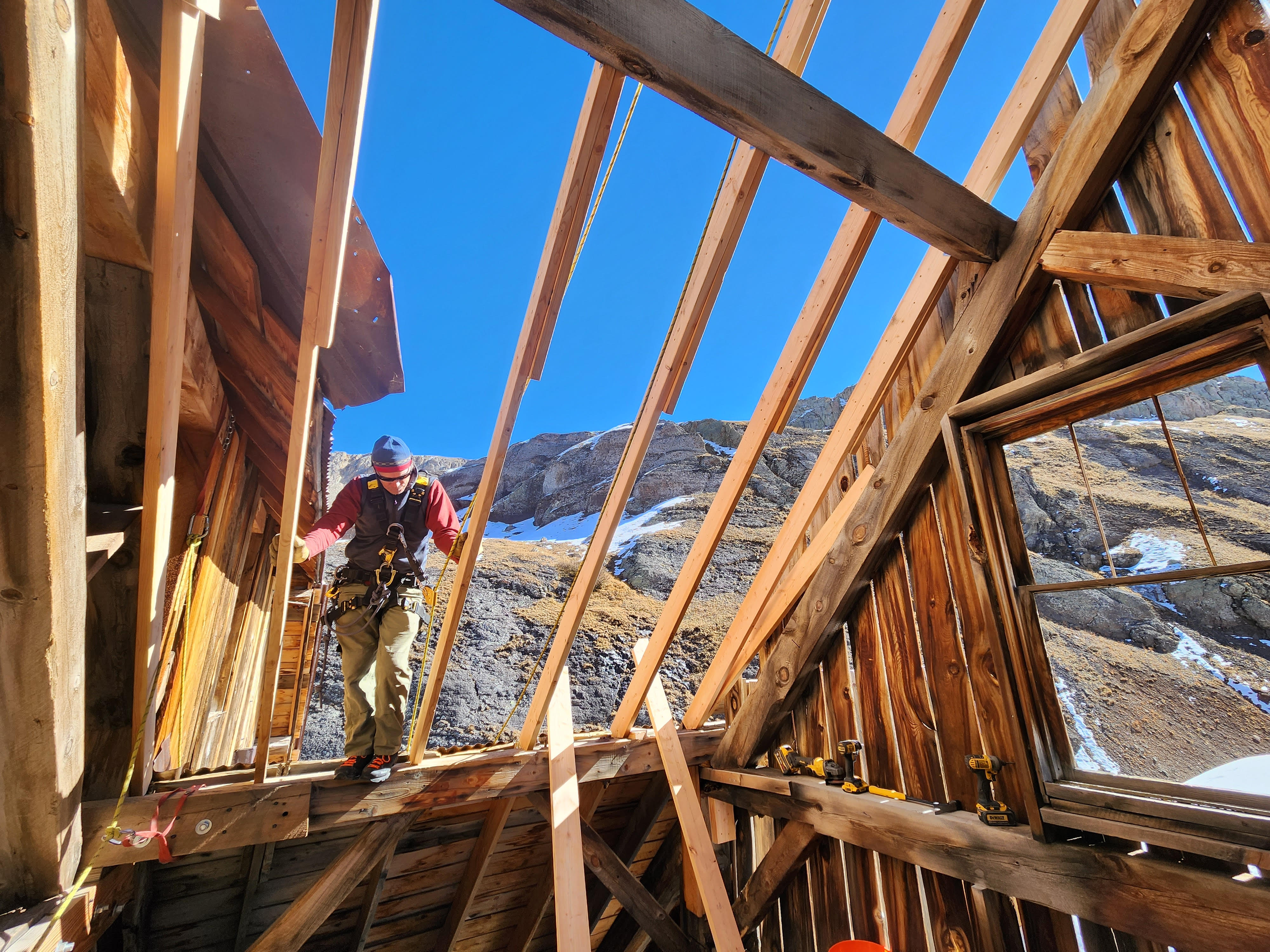
Colorado Preservation, Inc. worked to convince the mill’s owners that Lewis Mill was a special Colorado treasure worthy of stabilization. Its listing as an endangered site generated numerous inquiries from architects, contractors, photographers, and the International Millwright Society, helping build broader public interest in the structure’s future. A major partnership among Idarado Mining Company, the Town of Telluride, the Town of Mountain Village, San Miguel County, the Colorado Historical Society, and the State Historical Fund led to a successful stabilization effort in 2001. That work included reroofing and structural stabilization, with Summit Roofing and Klinke & Lew Restoration Contractors among those involved. Because of the mill’s remote location, helicopters were required to fly in materials and equipment, while workers reached the site by four-wheel drive vehicle or on foot. The $125,000 project helped ensure the continued monumental presence of the structure high above Telluride, and Idarado Mining Company later conveyed ownership of the mill to San Miguel County.
The historical importance of Lewis Mill received additional recognition on May 6, 2009, when it was listed on both the Colorado State Register of Historic Properties and the National Register of Historic Places. Today, Lewis Mill stands as a vivid reminder of Telluride’s mining legacy and of the engineering, labor, and technological innovation that shaped Colorado’s mountain communities. Its preservation protects not only a dramatic visual landmark, but also one of the state’s most important surviving examples of early twentieth-century milling technology.